

Against reducing people to viral keywords
On humility, ambition, seeing the best in people and a week in NYC alive with Knicks mania.

I just spent a week in the Best City In The World. I’ll admit, I didn’t even pretend to be a performative Knicks fan. I tried to catch Wednesday night’s game, but after getting back from the work trip I flew out for, I was too exhausted and passed out. I woke up around 11:30 p.m. to the sound of Manhattan erupting after the win. I couldn’t get back to sleep for hours because the energy pouring in from the streets just made me feel so alive. It really was even better than it looked on Instagram.
That work trip was the Female Founders Fund’s annual camp in the Hamptons, hosted by Anu Duggal - one of the earliest investors to focus exclusively on woman-founded businesses. Now in its sixth year, the camp brings together founders for three days of networking and panels, with this year’s attendees including everyone from Tory Burch and Bobbi Brown to Mielle Organics founder Monique Rodriguez and Harvard Business School professor Frances X. Frei.
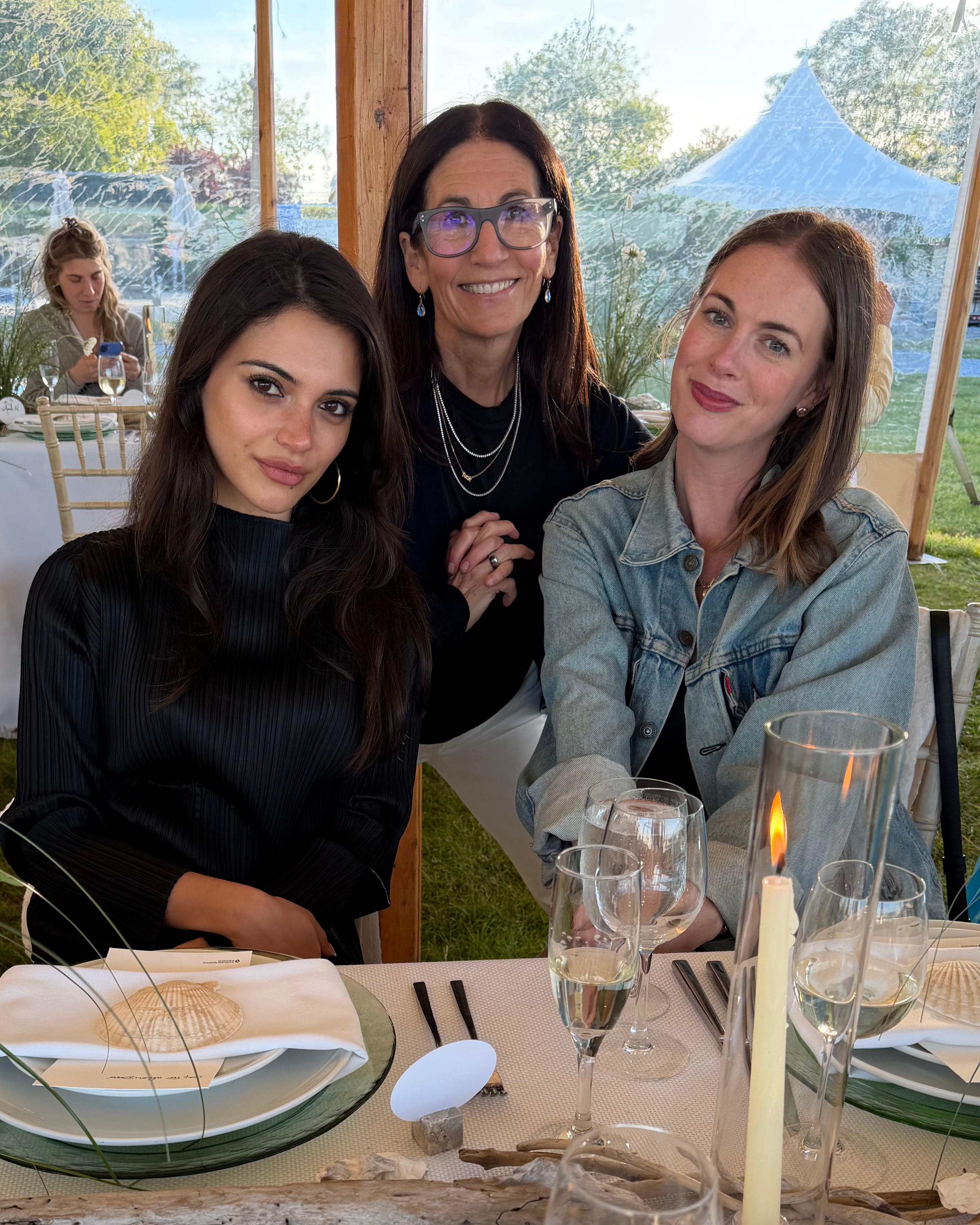
I know they invited me because of a piece I wrote back in March asking whether the girlboss is making a comeback. It was informed by some of the defining figures of the 2010s launching new ventures again, but really it was a jumping-off point for a wider look into how society treats ambitious women in the public sphere.
One thing I never fully squared about the girlboss takedown was that, while many of the criticisms were necessary and deserved, almost no attention was paid to the ecosystem that produced the phenomenon in the first place. The headlines that elevated these women into symbols of a new kind of success, where making millions of dollars was a happy, almost accidental byproduct of making the world a better place. The opportunity-hungry investors who encouraged growth at all costs with little regard for long-term durability. The rise of social media that encouraged founders to become personal brands as much as business leaders, blurring the line between the company and the woman running it.
By the time the tide turned, the reckoning landed almost entirely on the individuals and the system that helped create the myth escaped largely intact. And because so many of the women who built businesses during that time had become inseparable from the girlboss narrative, the backlash was a tsunami that engulfed many. To this day, the word “girlboss” still gives me full-body hives, and I sometimes get twitchy that if I say something overtly career-driven, I’ll be called one. It’s interesting, though, that since then the cultural pendulum has swung so heavily into tradwives and stay-at-home-girlfriends, where a woman’s role is once again framed as being in the home - but that’s a conversation for another time.
In the coming weeks I’ll be working on a follow-up Vogue Business piece about how the investment landscape can better serve women moving forward. After years of backlash and retreat, it feels like we’re entering a phrase that’s less focused on personal mythology and growth-at-all-costs, and more focused on fundamentals: building profitable companies and making products and services people actually use and want to rebuy. Aka the way we treat men who run businesses.
In the meantime, I’ve been thinking non stop about why ambitious women in particular attract so much vitriol and why other people’s success can feel so triggering to our shadow selves. I’m a big believer in the mind at large theory, and while I was in New York both Recho Omondi and Brenda Hashtag released podcasts that seemed to be circling thoughts I was already having while in these rooms. What are we really reacting to when someone else’s success provokes such a strong emotional response in us? And how much of it is about them, versus what they expose in us?
Since I got back, a lot of people have asked me how I found it - some with leading questions implying it was probably quite self-aggrandising. In reality, it was mostly resource-sharing: the kind of knowledge consultants charge hundreds of thousands of pounds to access. I sat in on roundtables and watched people swap contacts for game-changing specialists they met through friends-of-friends, and trade advice on how they’d handled vulnerable problems. Since I’ve been home, one woman has DMed me follow-up thoughts she thought might be useful for my article, while another asked for my email so she can introduce me to a founder who would be perfect for a separate piece I’m working on. I’m also planning to meet up with another during Cannes Lions next week - side note, reach out if you’ll be there and want to hang out, too.
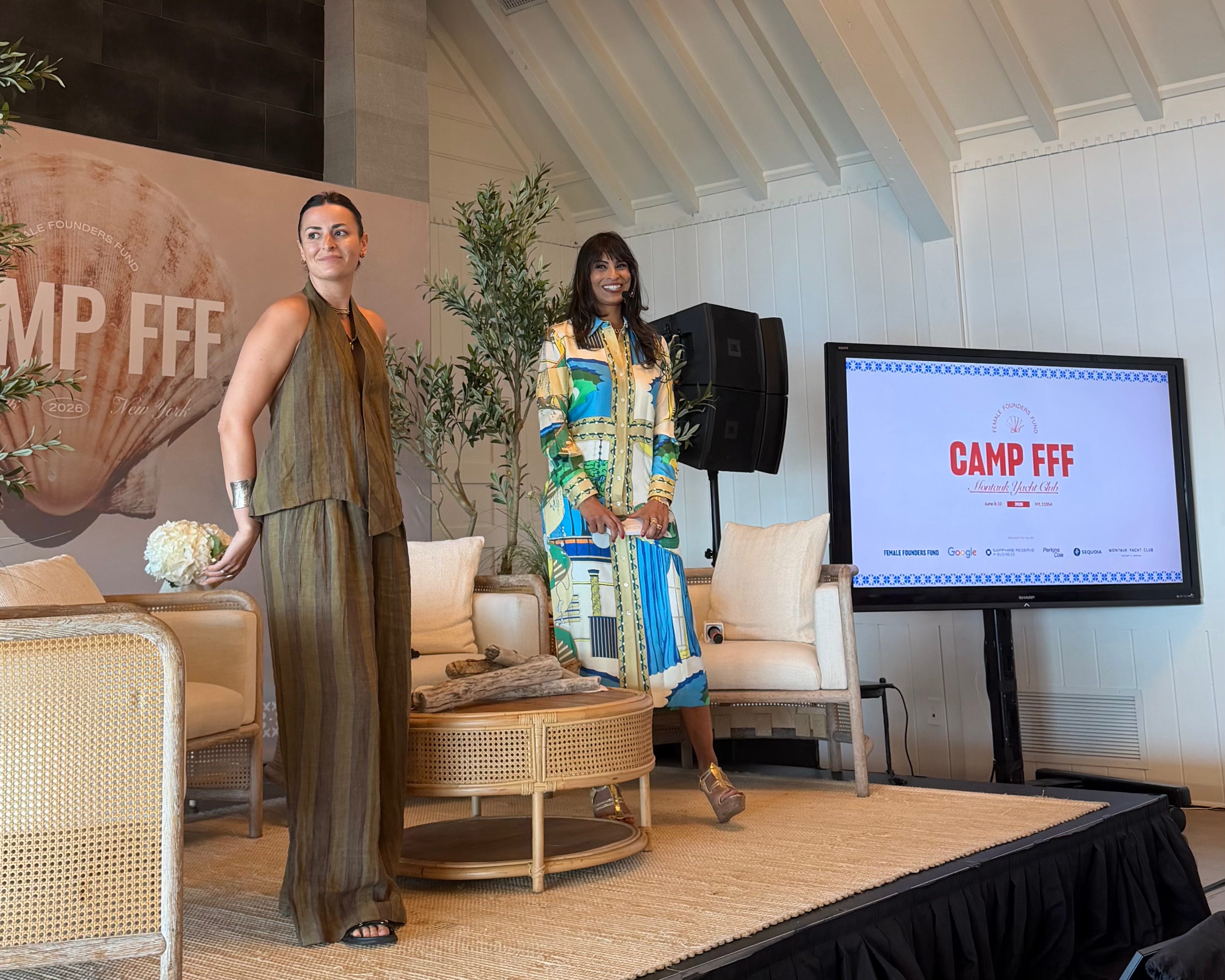
Of course, they spoke about what they do – as they should! – but it was exactly what Brenda talked about in her how to be a self promoter piece. It was from a place of complete abundance, where they were sharing in the hopes they could connect with likeminded people to potentially build together, and be of service to anyone who was struggling with similar things. I’m not saying I agreed with everything I heard. There were definitely people there whose views I don’t share, and the odd person who gave a hard sales pitch. But hey, that’s life! I also didn’t leave assuming every other woman founder thinks the same way because one person said something I wasn’t aligned with. We rarely extend that kind of sweeping logic to men, yet we apply it to women all the time.
Importantly, I didn’t put my back up towards anyone because I was threatened by their success. I listened to Recho’s podcast about the shadow side of levelling up on the bus back, and found myself engrossed in her account of announcing her incredible, landmark deal with Patreon, which was met with both celebration and disdain from her peers. I’m deeply inspired by her character, and loved hearing her talk through her own feelings surrounding envy, and her reframing of it as simply: “Good for her, I’d like to do something like that one day.”
Of course, it’s often a lot easier to undermine a woman by falling back on the same misogynistic bullshit men say, becoming a pick-me because, really, you’re not picking yourself. That’s a humbling thing to admit, and as a society, we’re terrible at feeling humbled. Listen, it’s taken me a lot of emotional maturing, and I’ve definitely slipped back into my animal brain when I’m feeling shit about myself, but I’ve come to love being humbled in the presence of impressive people. It’s one of the few things that gives you an honest view of yourself and shows you where you could be growing. I don’t mean that in some grim optimisation-bro way. Most of the areas where I want to do more are spiritual, creative, how I show up for my friends, my work and myself. Let’s be real, there’s also an ambitious part of me that wants to make more money.
An example: I find it hard enough to post consistently on this Substack, let carve out time to seriously monetise it. With so many other jobs on my plate, I keep telling myself it’s not something I have the capacity to think about. So when one founder casually mentioned how much she made from her Substack last year (like 200x what I am) while also running a full-blown business, I felt both humbled and inspired. I asked her for advice because she was already in this room so generously sharing what she’d learned about her main business, so of course she was just as open about the side project. It goes without saying that I learned a lot. That’s the thing about being humbled: it takes you out of defensiveness and into a place where you can actually take things in and grow from it.
In hindsight, I hate the title and stand first of my original “Is the girlboss making a comeback” article because I implied we need some sort of “Girlboss 2.0”, when really I think we need to stop reducing people to viral SEO social media terms altogether. The moment we give something a name, we attach a whole set of assumptions and connotations to it. We do this with everything - remember microtrends? - but we seem especially eager to do it to women. It’s interesting that tradwives have become the new girlbosses, and yet not a single woman called a “tradwife” actually identifies as one. Like I said - a conversation for another time. The problem is, once we create a catchall phrase, it becomes very easy to project all sorts of nastiness onto it and separate ourselves from the people inside it, which only makes it easier to then dehumanise them. We get to tell ourselves: that’s them, not me. When in reality, we can all learn something from one another.
All of this felt amplified by being in New York during such a special moment. People were chanting about their Muslim mayor and their Jewish bagels. “Knicks in five” became a universal conversation starter, which led me into long chats with random strangers on multiple occasions. I got to spend time with my childhood bestie, introduce her to one of my closest newer friends, and watch them exchange Instagrams so they can meet up later. The whole week felt like a reminder that people are usually kinder and more generous than the internet allows them to be. Short-form culture trains us to look for the worst in one another - something I want to write about at length. But when you spend just a bit more time getting to know someone before passing judgment, you realise how often you end up seeing the best in them instead.

We can never be, nor should we want to be boxed into a one, two or three word viral term. <3
In response to your last line "...seeing the best in them instead," you might appreciate this section called "Finding my dozen." https://followsoar.substack.com/i/195020322/finding-my-dozen
I often say "I'm a good egg just trying to find my dozen" and make the case that giving people initial benefit of the doubt is not optimistic or naive, but rather a competitive advantage. It all begins with a question - On a scale of 1-5 (5 being great), what do you assume someone is when you first meet them? This highlighted section walks thru why we should all start at 5.