

No one is bored and everything is boring
Our nostalgia obsession has trapped us in loops of aesthetic déjà vu and algorithmic déjà entendu. But what if this yearning is less about the past and more about our inability to move forward?


“Nostalgia will be the death of me” is a phrase I keep seeing across my For You Page. Usually it’s layered over blurry clips of primary school plastic chairs and Scholastic book fairs. Sometimes it’s a eulogy for the mythical vibes of 2016 or a love letter to the golden age of pandemic-era TikTok. The comment section is always some variation of the same refrain: The past was better. I want to go back.
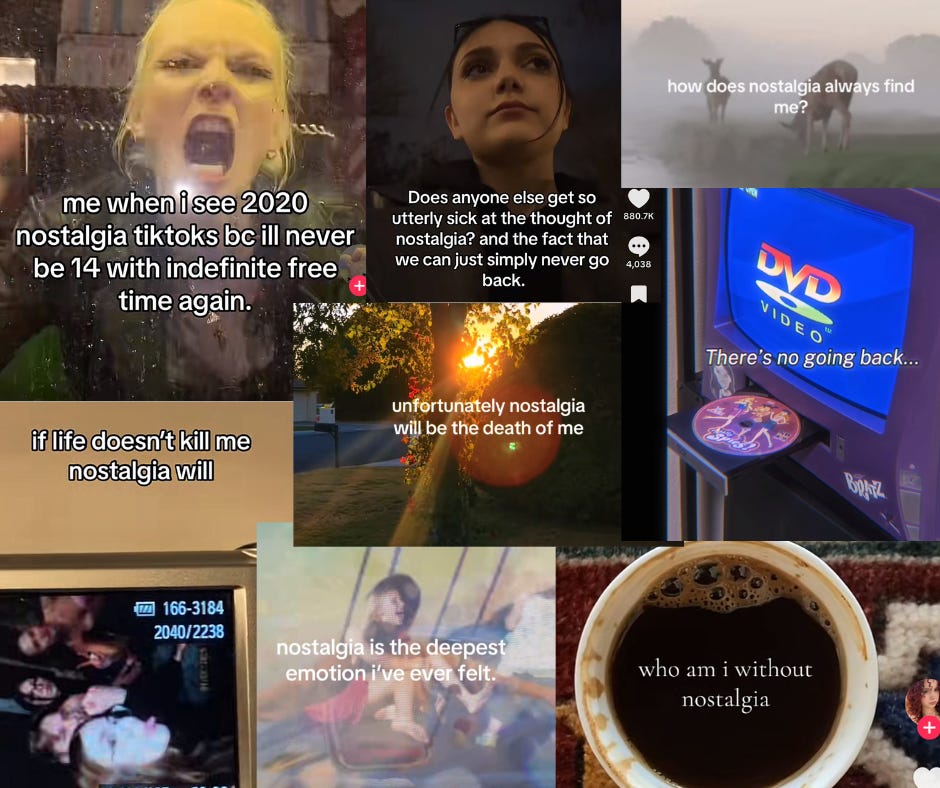
This content is manipulative by design, engineered to hit where it hurts – and clearly, it does. It feeds on the anxieties shaping the culture today: the fear that AI is coming for your job – even if that job already feels meaningless and precarious. The humiliation of living in an economic system where even basic stability feels out of reach — where you struggle to afford rent, the weekly shop and a pint is £8, yet somehow it’s still your fault for not manifesting harder. Can’t we go back to 2016 when the only thing we had to worry about was whether the dress was blue and black or white and gold?
But calling this nostalgia misdiagnoses the cause. What we’re calling longing is often just paralysis. It’s not only that we miss the past; it’s that we’ve given up on the future being any better.
In Ghosts of My Life, cultural theorist Mark Fisher called this phenomenon “the slow cancellation of the future.” He argued that contemporary culture had lost its capacity to imagine radical newness. Instead of moving forward we’ve entered a loop of retro-styled repetition, where the aesthetics of past decades return stripped of context or meaning. Culture, he wrote, had become a "ghost world" haunted by lost futures; futures that once felt possible but now feel unreachable. What choice do we have, then, but to look back and scavenge meaning from the cultural leftovers we’ve already consumed?
Fisher was writing in 2014 about music, but his diagnosis holds — especially when it comes to fashion, one of the most visible casualties of nostalgia’s grip. Once a forward-moving engine of invention it now feels like a closed loop of recycled references. 90s minimalism has come back via 2010s Tumblr minimalism, which came back via normcore, which was already a commentary on 90s minimalism. Don’t even get me started on Y2K.
There’s no shortage of criticism about this in online fashion circles, from the death of personal style as a moral failing to the rise of “core” aesthetics as identity stand-ins, but most of it traces back to the same underlying problem: there are no new looks, just new ways of wearing old ones. Walter Van Beirendonck diagnosed it best in a conversation with fashion commentator Bliss Foster: “When we look back to the 70s, 80s, 90s, we have the typical thing that you recognise immediately… and this we lost the last ten years.”
The visual signature of a decade has collapsed into a kind of aesthetic static. Although Beirendonck is one of the few designers still trying to push through, committed to inventing silhouettes and techniques that couldn’t have existed before, even he admits it’s an uphill battle. “How do you pull people out of nostalgia?” he asks. “How can you convince a high schooler to embrace where they are, right now, in their time?”
It’s a good question, but maybe it’s not the only one we should be asking. Say we do finally pull that high schooler out of their nostalgia kink – what would they even wear? What does fashion today even look like? Most of what circulates in the mainstream wouldn’t look out of place in a 1986 magazine. The radical aesthetic leaps that once defined eras from psychedelia to punk, minimalism to club-wear just don’t happen anymore.
This is what I’m calling fashion’s metaphysical problem. The industry moves faster than ever – microtrends, drops, endless fashion weeks that roll into one another – but conceptually, it’s stuck. Paralysed by references. Sedated by pastiche.
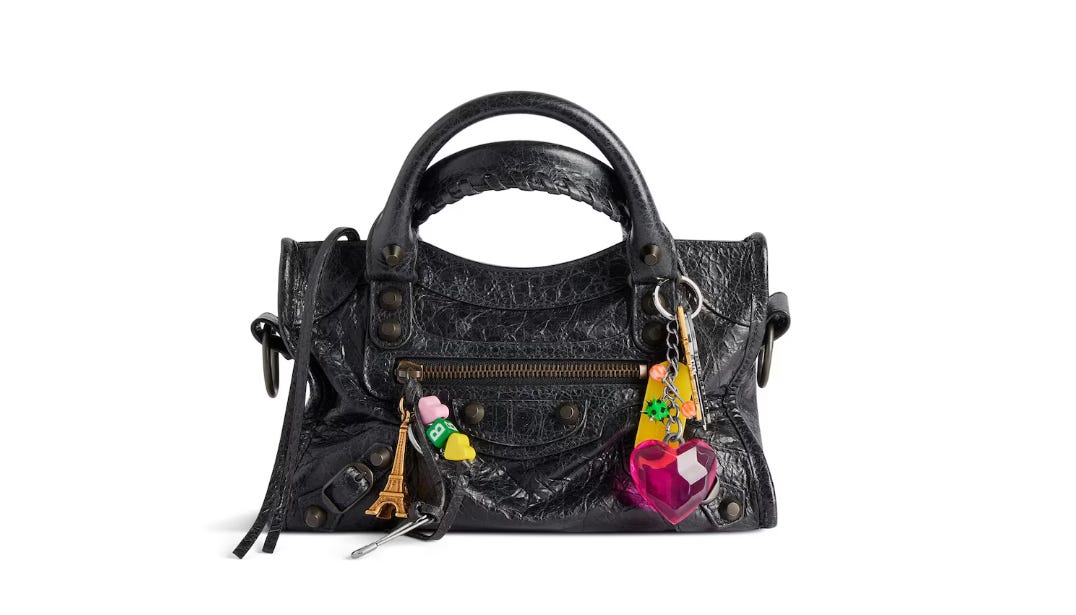
Most fashion today feels like an endless hype cycle of the falsely “new.” Like iPhone upgrades, change arrives in polished increments that promise innovation but deliver only sleeker, subtler repetitions. Luxury houses are reissuing their Y2K “It” bags like sacred relics — Dior’s Saddle, Chloe’s Paddington, Balenciaga’s City bag — now with the thrilling addition of a bag charm here, a new colour way there. Meanwhile, the red carpet has become a stage for sartorial reincarnation. At the 2024 VMAs, Tate McRae wore a black lace Roberto Cavalli mini nearly identical to Britney Spears’s 2001 look — down to the visible bra and briefs. It’s a new mode of fame built on simulation, where originality is performed through carefully curated echoes of the past. And it’s just so boring.
Why is everything so boring now?
To understand why culture feels like it’s spinning in these nostalgic circles, Fisher suggested we look at the conditions that once made newness possible. Between the 1950s and 1990s, entire subcultures didn’t just appear because people had good ideas (we still have those, assuming we don’t all rot our critical thinking via generative AI). They emerged because people had the time, space and material freedom to explore them.
For one, people could actually afford to be artists. Even without family money, it was possible to fumble through creative experiments without immediately worrying about monetisation, audience fit or marketability. Though the erosion began in the Thatcher/Reagan era, much of that infrastructure — free education, low rents, generous welfare — remained intact enough for subcultures to flourish until the early 2000s. You could go to art school for free, then start a post-punk zine with your best friend just for fun. Now try doing that today while racking up £30k+ in student debt, paying £1,500+ a month for a mouldy studio flat and juggling three freelance gigs.
Profit-maximising property developers have also stripped cities of the affordable spaces where people once gathered to exchange ideas and have actual, unscripted experiences - where subcultures flourished. Now, most offline spaces are designed with the online gaze in mind, built to be photographed and shared across socials. Even spontaneous moments feel prepackaged, either shaped by the knowledge they’ll be turned into content, or mediated by a brand presence that reduces everything into marketing.
The other major shift is technological. Social media has completely warped our sense of time and context. In Retromania, music critic Simon Reynolds talks about the “oppressive weight of the past” the internet places on culture. Everything that’s ever existed is now instantly accessible, stripped of chronology or consequence. We live in a kind of cultural primordial soup, where everything is happening, everywhere, all at once — and if you’ve seen the movie, you know what a total head fuck that is to inhabit.

This isn’t the only way social media has distorted our perception of time. One recurring theme in the nostalgia discourse is the mourning of a specific childhood feeling: the sense that the present was forever, that time stretched out like a highway instead of closing in like a trap. Today, we’re convinced there isn’t enough time to do anything – even though we regularly find the time to spend six hours a day staring at our phones.
This is because we’re constantly being told to be productive, to optimise, to make the most of every minute. As a result, the language of capitalism has colonised our inner lives — routines must be “mastered,” time must be “hacked,” rest must be “earned.” And yet the very device that delivers these commands is the same one that traps us in a state of suspended animation.
Rebecca Jennings captures this beautifully in Vox, writing about her attempt to reclaim her attention span. Counterintuitively, she argues that the key might be taking more breaks. Some attention experts, she notes, recommend watching long, slow films to rebuild focus and stretch cognitive patience. When she tried it herself — watching Jeanne Dielman, a 3.5-hour film in which a woman quietly performs domestic chores in her claustrophobic apartment — she was surprised by how easy it was to pay attention.
“The real problem, I realised, was the guilt that came with granting myself the luxury of spending three and a half hours doing something that would not, in any tangible or measurable way, improve my life. My mind drifted to the stovetop grate, which needed cleaning, and my step count, which had yet to hit 10,000 that day. It dawned on me that these concerns have never stopped me from spending the same amount of time on my phone and that the reason for this is my phone prevents me from thinking about anything at all.”
The space to do things for no measurable gain has been systematically eroded by our constant proximity to consumer capitalism. It used to take effort to be interrupted by the urgency of commercial culture. You had to turn on the TV, walk into a store, flip through a magazine. Now, you carry that urgency in your pocket. We live inside our phones, inside a portal of infinite stimulation. Every ping is a prompt. Every notification is a command. Try spending six months developing a new aesthetic when the algorithm is pushing you, daily, to be on trend right now.
“No one is bored, everything is boring,” Fisher wrote of this modern condition. We’ve cancelled boredom and replaced it with the 24/7 stimulus of the scroll. But in doing so, we’ve also eliminated the strange, fertile psychic drift that once allowed something new to take root. “Boredom presents us with the blanket of death... the necessity for us to actually do something in the face of existential terror. It’s a junction. That’s been eliminated now,” he wrote.
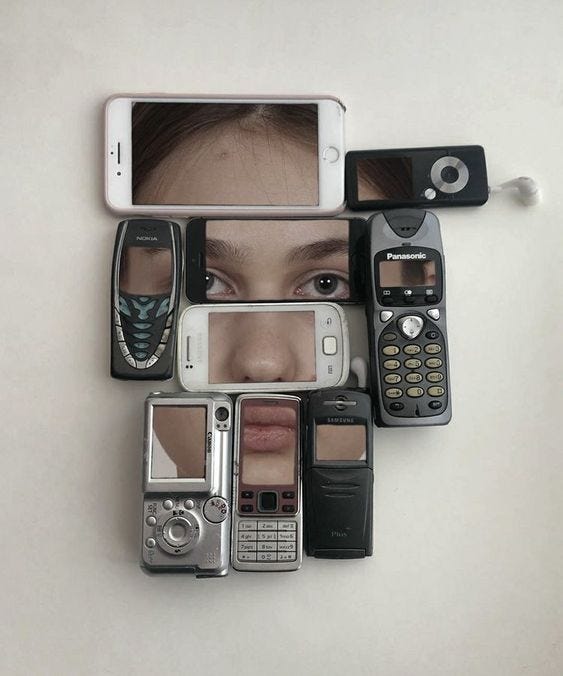
Great cultural ruptures like punk or grunge didn’t emerge from hyper-productivity. It’s hard to imagine groups of young people stressfully rushing through ideas, hoping that something sticks, being told by their record labels they need to post daily on TikTok and that they need to deliver something by today or they will be cultural nobodies. The same holds true for fashion’s most defining movements. Today, those once-radical aesthetics get steam rolled into “cores,” repackaged as TikTok trends, churned into capsule collections and forgotten by next month.
Your nervous system wasn’t built for this. Anxiety doesn’t make culture interesting. You can’t feel your way into the new when you’re constantly distracted. You can’t create something original while doomscrolling the past, especially when what you’re consuming has been stripped of context, reduced to a reference and rebranded as a vibe. But here’s what you can do…
How to have a non-boring idea
First, stop trying to have a good idea. "Good" implies marketable and algorithm-ready. What you want is a non-boring idea, which is harder and riskier but far more worthwhile.
Second: don’t go chasing a “non-boring” idea just so you can use it to game the algorithm or make a viral TikTok. That’s already the wrong headspace. I get it — truly, I do. I’ve had posts go viral. You get a dopamine hit, maybe a few days of attention, and then… nothing. The internet moves on. You’re back where you started.
But a non-boring idea born from lived experience has the potential to rupture culture, or at the very least, to carve out a sliver of truth in a landscape built to erase it. Not every non-boring idea will change the world, of course — but I can promise you a boring one never has. Boring ideas exist to fill the void and unceremoniously disappear. But the ones that come from someplace real tend to lodge themselves in the collective psyche. And that kind of resonance lasts far longer — and means far more — than a passing spike in algorithmic applause.
So how do you find one?
1. Make space for boredom (on purpose)
You can’t generate original thought while mainlining TikTok in one tab and editing a pitch deck in the other. Cast away the idea that boredom is the enemy - actually, it’s the entry point. Non-boring ideas need empty time to breathe. Take a long walk without headphones. Watch a weird slow movie. Sit in silence and feel awkward.
2. Go deep on something useless
Pick an obscure obsession, even better if it’s unrelated to your work or identity. Study ancient knots. Collect vintage cereal ads. Read fan theories about a show you’ve never seen. The internet flattens everything into content, but a non-boring idea comes from specificity, not relevance. Chase the rabbit holes. Useless knowledge has a long half-life.
3. Create before you consume
This is excruciating, but essential. Before opening your phone or checking your feeds, make something. This could be as little as a stray thought in the Notes app. The goal isn’t to make something good, but to make something first. This gives your brain a chance to lead instead of echo.
5. Resist the algorithmic instinct
If your first thought is ‘what does this sound like?’ Or ‘where have I seen this before?’ Then you’re already in reference mode. That’s not inherently bad, but try to go one level deeper. Ask instead: ‘What’s missing from this conversation?’ Or ‘what’s the question no one’s asking?’ Sometimes a non-boring idea is just a refusal to repeat what’s already being said.
Ultimately you don’t chase a non-boring idea so much as notice it, faintly, just at the edge of your attention. And then you wait. You live with it. You don’t explain it too quickly. Instead you let it unfold according to its own strange logic until it starts to make a kind of sense — not to everyone, maybe not even to you — but enough to follow.
“the language of capitalism has colonised our inner lives” ✍🏼 ✔️
Loved every part of this <3